Mental Health: Strength over Adversity

Guest blog by Collette, a self advocate who is a qualified Mental Health First Aider.
Stronger, Louder, Together!
Guest blog by Collette, a self advocate who is a qualified Mental Health First Aider.

This webinar is focused on The Mental Capacity Act and any issues in implementing it and what good decision making and advance planning looks like under current circumstances.
The webinar is led by 3 Barristers from 39 Essex Chambers – Nicola Kohn, Alex Ruck Keene and Steve Broach.
They cover the basic principles of the act, implementing them in practice under the Coronavirus law and wider restrictions and try to clear up myths or misunderstandings around current restrictions and what is possible or expected.
The webinar is open to anyone with an interest in decision making, restrictions and the legislation.
VLOG (video blog) by Gary Bourlet, Membership and Engagement Lead with Roy Hayes, self advocate

This webinar will be hosted by Nesta, an innovation charity, which has pioneered the 100 Day Challenge method that puts frontline staff and people with lived experience at the heart of systems change.
Nesta has recently worked with Essex County Council to run a 100 Day Challenge partnering with communities to learn how to better support residents with learning disabilities and autism to live a meaningful life.
The Challenge gave team members the space to collaborate and build on each other’s expertise – it involved more than 36 organisations and 23 people with learning disabilities and autism, working together to improve outcomes for more than 300 people.
Three teams across the county tested sixteen ideas ranging from new ways of supporting young people into employment, to bringing health services into the community and setting up an inclusive cricket team.
This webinar will explore what participants learnt about how to listen to people with learning disabilities and autism, collaborate to test and deliver their ideas, and support them to take on leadership roles.
We will be hearing from representatives from Essex County Council as well as people who took part in the Challenge.
Blog by Gary Bourlet, self advocate and Membership and Engagement Lead for Learning Disability England
CQC wants to encourage people to share their experiences of care – good and bad, as this information supports their monitoring and inspection activity, to act when they find poor care and highlight good care.
Declare Your Care has been a year-long, cross sector campaign (Hospitals, Care homes, GP Practices, care in your own home). It launched nationally in February 2019 and has run throughout the year focusing on key population groups which we know have lower awareness of CQC.
On Tuesday 14th January, we launch the fourth and final spike of our #DeclareYourCare Campaign focusing on people with a learning disability, their family, carers and advocates.
We have worked in partnership with Learning Disability England and Ace Anglia to develop video case studies of people sharing their stories.


Our new Covid Response Funding grant pot in partnership with the Department of Health and Social Care is now open for applications.
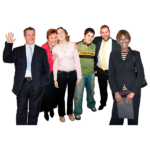
Four areas of Greater Manchester have been working to improve the lives of people with learning disabilities. The programme has worked with people and families and has focused on people who were most at risk of ending up in institutional settings. They concentrated on work supporting young people, preparing for adulthood, and working with providers to prepare for people coming home.
You can read the report here.
The webinar will talk about the programme and explore the work done in two of the four areas, Rochdale and Wigan.

Sue Sharples has used a Winston Churchill Memorial Fund grant to travel to the USA and Canada to help us all to learn their lessons around preventing abuse and promoting sexual health for people with learning disabilities.

This webinar will be delivered by Dr Godfred Boahen, who is a qualified social worker and works for the British Association of Social Workers (BASW). The organisation is made up of about 20, 000 social workers who have come together to advocate for social workers and the people who use services.
Recently, the government asked the BASW to find out the skills, knowledge, and values that are needed to do good social work with adults with learning disabilities.
Together with adults with learning disabilities, carers, social workers and their managers, BASW co-produced the Capabilities Statement for Social Work with Adults with Learning Disability
In this webinar, Godfred will talk about how they involved adults with learning disability in creating the Capabilities Statement and what they thought was important. Godfred will explain why his organisation believe that what they found shows the importance of good relationship between social workers and adults with learning disability that they work with.