
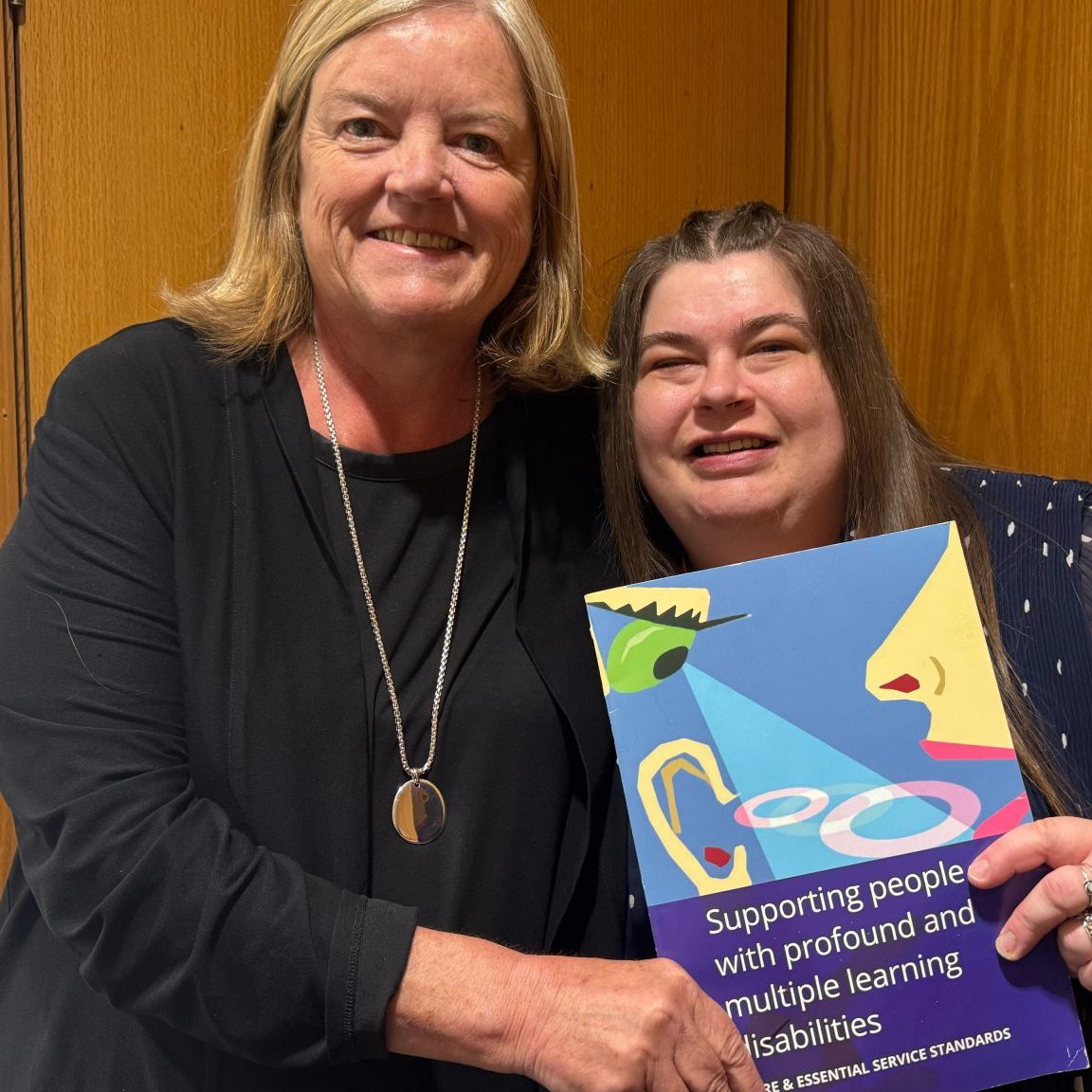
Baroness Casey is leading an inquiry into how Social Care works.
Last week Baroness Casey made a speech about her work on Social Care.

In her speech Baroness Casey says the UK’s social care system is not fit for today’s society and needs major reform.
Learning Disability England welcomes the points she makes in her speech about the system and how we as a society need to think about how everyone can be supported to live Good Lives.

Many members have been raising the same points Baroness Casey found in her 1st year of work on Social Care. She focused on system problems and talked about what an important job it is to support people and when it is being done well you might not notice it.

We know there is good support happening. But we need the right systems — and the laws to be properly put into practice — so everyone can get good support.

We look forward to helping all different kinds of members of Learning Disability England to be part of the national conversations Baroness Casey’s commission is starting next.


1. Social care was not set up like other systems like the NHS
When the UK welfare state was designed after World War 2, systems were created for things like the NHS, housing and benefits — but not social care.
Today, the situation is very different:
- People live much longer.
- More people have long-term illnesses or disabilities.
- More women work outside the home.
- There are fewer working-age people to care for older people.
Because of this, the country now faces what she calls a “sixth giant” problem: how to care for an older, sicker population.

2. The system is confusing and fragmented
Baroness Casey says there isn’t really a single social care system. Instead, responsibility is split across:
- Government departments
- The NHS
- Local councils
- Thousands of different care providers
This creates:
- Confusion about who is responsible
- Arguments over who pays
- Stress for families trying to navigate the system.
3. The system is fragile
She says social care is very unstable in several ways:
Care workers
- Often poorly paid.
- Many on zero-hours contracts.
- Not always paid for travel time.
- Mostly women.
Care providers
- Some small providers struggle financially.
- Some large private providers have too much power over councils.
- Providers frequently go out of business, causing disruption.
4. Health and social care services do not join up around the person
A major problem is the gap between the NHS and social care.
In reality:
- Many people who need social care also have medical needs.
- But the NHS and councils argue over responsibilities and funding.
Baroness Casey says the NHS has become focused mainly on hospitals rather than broader community health support.
This divide leads to problems such as:
- Delays in hospital discharge
- Arguments about funding
- Families left to manage when systems are arguing

5. Dementia care is not being taken seriously enough
Dementia is now one of the leading causes of death in the UK, yet she says the response people get is weak.
Problems include:
- Dementia often treated as an inevitable part of ageing rather than a disease.
- Families left without clear guidance or support.

6. People with severe illnesses face slow and bureaucratic processes
Even people with severe conditions such as Motor Neurone Disease (MND) often face:
- Multiple assessments
- Long waiting lists
- Slow home adaptation processes
In some cases, adaptations take over a year, which is unacceptable for people with a very limited life expectancy.

7. The public needs to help decide the future system
Baroness Casey says the country must have an honest national conversation about social care, including:
- Who should receive support
- How much families should contribute
- What the government should provide
- How the system should be funded.

8. Immediate actions she has proposed
She has asked the government to consider several early changes, including:
- A national safeguarding board to better protect vulnerable adults.
- More investment in dementia research and trials.
- A national dementia lead (“dementia tsar”).
- Faster help for people with Motor Neurone Disease, including a fast-track system for care and housing adaptations.
The government confirmed it will start work on these early actions. You can read about that here