Self-advocacy, the pandemic and working together
Self-advocacy, the pandemic and working together

Blog by Gary Bourlet, Membership Lead and spokesperson in our team as well as a self advocate of long standing
Stronger, Louder, Together!
Coronavirus (COVID-19) testing in adult care homes – How to access test kits and step-by-step guides on how to use PCR and rapid lateral flow test kits
Easy read on testing yourself for the Coronavirus – from The Department of Health and Social care
The NHS test and trace system helps follow where the virus has spread and stop it spreading any further.
This will help to control the virus.
Adult Social Care Rapid Testing Fund
NHS Test and Trace service in the workplace. For organisations and people who employ their own PAs.
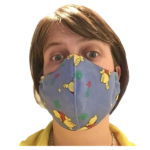

A face covering is something which covers your nose and mouth. It doesn’t have to be a mask. It can be anything that covers your nose and mouth.
Some people do not have symptoms so they can spread Coronavirus without knowing.
Face coverings are to stop you from accidentally spreading the virus.
The government has made new rules about wearing face coverings in public places to help protect people from Coronavirus.
Some people do not have to wear a face covering for health reasons.
Read the full government guidance about face coverings.
This includes when you have to wear a face covering and who is exempt for health reasons.
It also tells you how to make your own face covering.
Here is the government exemption card for you to upload on your mobile phone
Here is the government exemption card for you to print
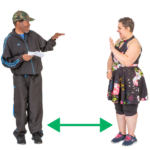

Easy read on some of the rules that have changed – by Mencap. Talks about the 6 people rule, your support bubble and going out and about.
Updated Guidance around social distancing and meeting with others – You must follow this guidance from Monday 14th September.
Social distancing is to try and stop the virus spreading to other people.
The government says we should stay two metres (three steps) apart from people we don’t live in the same house with.
We should also take other measures like washing our hands and covering our faces.
The guidance is still important even though we are now moving out of lockdown.
Staying alert and safe – social distancing guidance (Updated 31 July 2020).
This tells you about the new rules on social distancing indoors and outdoors.
This tells you about the new rules on social distancing when you are spending time with people you don’t live with.
Guidance about funerals during Coronavirus from Public Health England.

The government have not yet published easy read information about the new rules on social distancing.
We will update this page when they do.
In the meantime you can see other resources about social distancing and the new rules here
Wordless stories to help children returning to school from Books Beyond Words – easy read.
Schools re-opening: information relevant to children and young people with severe learning disabilities – an information sheet from the Challenging Behaviour Foundation.
Recovery, Re-introduction and Renewal: Safe and Successful Returns to School – a handbook from Whole School SEND designed to help schools and education settings through Covid-19 and beyond.
Mencap have published easy read guides about:
Coronavirus resource hub including audio and video resources, and a weekly news update, from Inclusion North.
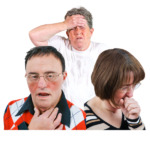

The government says that people who think they might have the virus or have some of the symptoms need to stay at home for 7 days.
Anyone who has been in close contact with a person who tests positive for Coronavirus needs to stay at home for 14 days.
This is called self-isolation.
You might get a phone call from test and trace if you have been in contact with someone who has the virus.
Easy read guidance for people who need to self-isolate
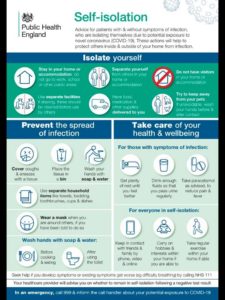
Public Health England have made a useful poster about self isolation.
This is useful if you think you might have the virus or if you have have been in contact with someone else who has symptoms of Coronavirus.
This is guidance for people who think they might have the virus or have some of the symptoms. It is also for people who have been in direct contact with someone with coronavirus.
Government guidance for people who need to self isolate
Easy Read posters from Photosymbols on the latest guidance including testing and shielding.
Easy read information on face coverings made by Mencap
Social Story on why people are wearing masks
Public Health England have made a useful poster about self isolation if you think you might have the virus or have been in contact with someone else who has symptoms of coronavirus. You can see this below:

The Coronavirus situation keeps changing all the time. On this page you will find older guidance documents which are now out of date. But you might still find them useful.
NHS services access during Coronavirus guidance – full and easy readversions.
NHS guidance about discharge from hospital during Covid 19.
The Office for National Statistics published Coronavirus (COVID-19) related mortality by religion, ethnicity and disability: England and Wales, 2 March 2020 to 15 May
Government guidance about staying home
Government guidance for social care including guidance on residential, supported living and home care settings.
Self-advocacy, the pandemic and working together
Blog by Gary Bourlet, Membership Lead and spokesperson in our team as well as a self advocate of long standing
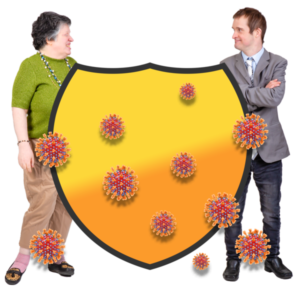

If you have a serious illnesses or health condition, you might have been asked to shield to protect yourself from Coronavirus.
This means staying at home and not seeing anybody unless you have to.
The advice about shielding is now changing. And everyone’s health conditions and support needs are different.
If you are unsure about whether you should still be shielding, ask your doctor or consultant.
Latest guidance on shielding – full version (Updated 4 August 2020)
This guidance is for adults and children in England who are clinically extremely vulnerable.
If you’re clinically extremely vulnerable you should have received a letter confirming this or have been told directly by your GP or hospital clinician.
Easy read guidance on shielding from Public Health England. (Updated August 2020)
If you are confused or unsure about what to do, ask your GP.

As guidance changes how can support services help people with learning disabilities stay healthy including having an annual health check?
Read more “Good health and Annual Health Checks: Webinar”