Sleep Ins: the Supreme Court Judgement

The Supreme Court has published its judgements about Sleep-Ins and pay.
Stronger, Louder, Together!
Learning Disability England wants to be led by its members, so that we do what matters to people with learning disabilities
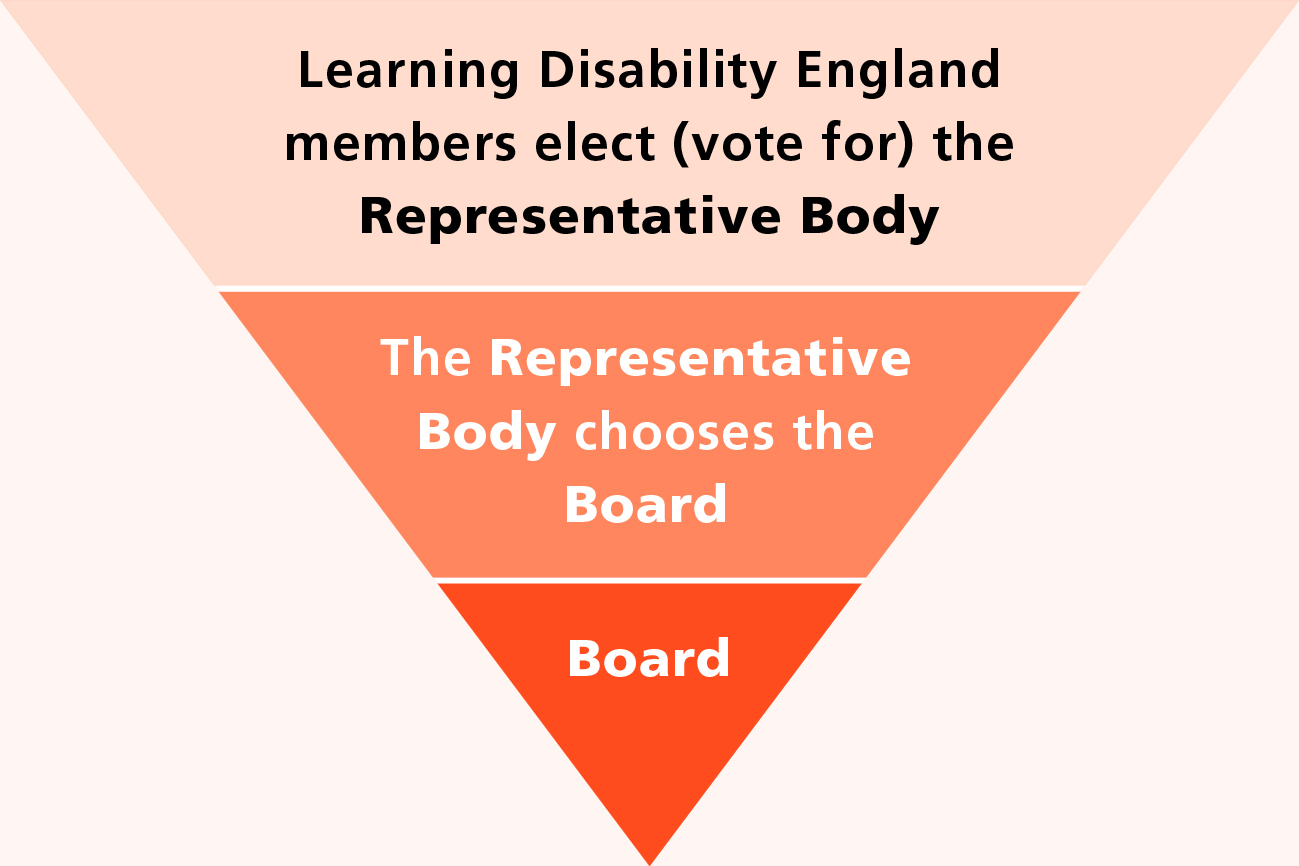
If you want to read more about the governance arrangements of Learning Disability England you can read an easy version of our Articles of Association.
The Supreme Court has published its judgements about Sleep-Ins and pay.

Choosing the right membership category for you

We organise our membership to reflect three different experiences and voices:
– Self-advocates (including self-advocacy organisations)
– Families and friends (including family carer and support organisations)
– Paid supporters and partners (including individuals who work in social care, service providers, commissioners, universities, development agencies and others)

Individual members can be:
– a self advocate with a learning disability
– a family member or friend of someone with a learning disability
– someone who works with people with a learning disability
– an ally who wants to be part of our national movement

Do you want to join as an individual?
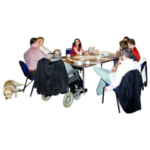
What are self advocacy and family carer groups:
– your organisation is led by self-advocates and/or family members
– if your self-advocacy or family run organisation gets most of its income from delivering services rather than doing self advocacy and/or family voice support, then you will be part of the paid supporter category.
Do you want to join as a self advocacy or family carer group?

What are paid supporter organisations?
– paid supporter organisations get most of their income from delivering services
– they are organisations or companies who provide, commission or in other ways aim to improve the lives of people and families.
– they can be very small organisations or very large ones. The different membership rates mean organisations pay what they can afford

Do you want to join as a paid supporter organisation?
What are partner organisations?
– We know there are organisations with a much wider brief who have told us that they are also keen to support Learning Disability England’s work
– Partner organisations might be law firms, accountants, academic institutions, government departments etc

Do you want to join as a partner organisation?

Want to find out more about the benefits of membership?
Or find out more about our aims and values?

Guest blog from Jan Walmsley on encouraging people with profound and multiple learning disabilities to be more involved in self-advocacy.
Other organisations with a much wider brief have told us that they are also keen to support Learning Disability England’s work.
We have therefore created a new category called Partner Membership to enable these organisations to join our movement.
We have therefore created a new category called Partner Membership to enable these organisations to join our movement.
Partner membership is open to organisations with a much
wider brief.
Organisations such as such as legal firms, universities, policy centres or similar.
Join now as a partner organisation by clicking here.
Or by phoning us on 0300 111 0444.

Membership fees for partner organisations depend on the size and type of your organisation.
Partner membership for Statutory, NHS or national organisations or national companies, such as local authorities and CCGs, is £995 per year
Partner membership for other smaller companies is £100 per year
Today the Care Quality Commission (CQC) have published their report about the review of ‘do not attempt cardiopulmonary resuscitation’ (DNAR)decisions during the COVID-19 pandemic.
Read more “CQC publish review of DNAR during Covid 19: ‘Protect, respect, connect’”


Learning Disability England is England’s only national movement where people with learning disabilities, families, friends and people in paid supporter roles come together on an equal basis.

That’s because we are stronger and louder together! Together we work towards people with learning disabilities having good lives with equal choices and opportunities as others.

Organisational membership is for any group, company, organisation, local authority, regional/national board or collection of people who wants to become part of the movement.
Self Advocacy and Friends and Family organisational membership bands are for groups where the majority of their income is about voice or representation only. These are groups that have a structure of their own, for example a constitution.

These leaflets tell you a bit more about why you might want to and what it means to join the membership as a support provider or a micro-provider.

To join as an organisation/group, your membership cost depends on your size and turn over.
You can see the different categories below.


When you join the membership through this online form, you can add the code that best fits your organisation or group.
If you would like to discuss membership in more detail, please do contact the staff team by email at: info@LDEngland.org.uk or by phone on 0300 111 0444

You will be joining England’s only organisation that brings everyone together: people with learning disabilities, families, and professionals.
You will get weekly information, news, new ideas, resources, and webinars, which will be useful to your colleagues and people you support.

You will be making a statement of support for a brave, national movement working with people with learning disabilities for change.

You can influence and inform campaigning work with partners, government and members.

You will gain an opportunity to join our network of spokespeople, raising the profile of issues you care about.

You will get access to a plethora of events, meetings and conferences that will be useful to people throughout your organisation or group.
You will have a say in what LDE does, being able to shape the movement for change.

You will get weekly information, news, ideas, resources and webinars which will be useful to your colleagues and people you support.

You can find solutions to problems and new ideas through facilitated co-production and quality and improvement tools and networks.

You will be helping your organisation’s mission by: supporting work or campaigns that you agree with, contributing to a wider benefit to your community of interest or beneficiaries, helping change and improve what you do.

You will be part of facilitated problem solving networks or debates on issues that face people and organisations including policy and practice changes e.g. Learning Disability England Members have worked together on challenging the misuse of DNAR notices and directly influenced the work on stopping them.
A conversation between Shaun Webster and Gary Bourlet

Last week saw the end of the Learning Disability England Virtual 2021 Conference.
It was amazing to hear from so many inspirational self-advocates .
If your organisation is led by self-advocates and/or family members, you can join as a Self Advocacy or Family Carer Organisation.
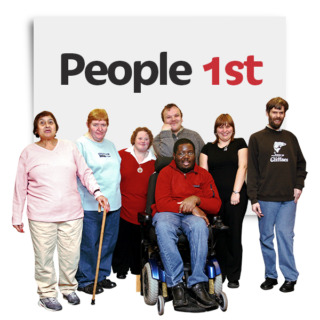

If a self-advocacy or family run organisation gets most of its income from delivering services rather than doing self advocacy and/or family voice support, then it will be part of the paid supporter category.

We know that small groups and voice organisations come in different shapes and sizes.
So our membership fee structure from 1
December 2020 reflects this:
Turnover less than £200,000 a year:
£25 a year
Turnover in excess of £200,000 a year: £100 a year

Join now by clicking here.
If you want to pay a different way, please email us on:
or phone us on 0300 111 0444


Learning Disability England is England’s only national movement where people with learning disabilities, families, friends and people in paid supporter roles come together as equal people.
That’s because we are stronger and louder together! Together we work towards people with learning disabilities having good lives with equal choices and opportunities as others.

Individual membership is for any individual person who has a learning disability, is a family member, a friend, in a Circle of Support or is a professional working in this area.

Joining LDE means you can give your opinions and get your voice heard. We are involved in many consultations, debates and policy work where your voice is important and people will listen to you.
These leaflets tell you a bit more about why you might want to and what it means to join the membership as a self-advocate or family member.

You will be joining a group of people who also want people with learning disabilities to live good lives.

It is a way of telling people that you support a national movement working with people with learning disabilities for change to happen.

You can influence and be part of campaigning work with partners, government and members.
You will get good information, solutions to problems and new ideas from different meetings, conferences, webinars and resources.
You will be able to join our group of spokespeople, talking about the important things you care about.

Individual Membership (that’s Membership for 1 person) is only £12 a
year.

If you don’t want to join online, you can download a Membership form and return it to us by post.

If you are an organisation or group run by self – advocates or family carers you can join as an organisation.
If you would like to talk this through with us, you can call on 0300 111 0444 or email us at: info@LDEngland.org.uk.