Building the Right Support

People with a learning disability or autism may be kept in hospital or a treatment unit because of the way they have behaved.

Sometimes these people are held for too long, making the person with a learning disability and their families very unhappy.

There have been some changes to how the Department for Health and Social Care lead on the work to stop people going into specialist hospitals or help people leave after treatment with good community support.

This has been called the Transforming Care programme before.

They are now calling all the work Building the Right support.

This is the name that has been used before for the national plan.

You can read the national plan here

You can read the national service model here

The national plan came from the Building the Right Support evaluation in 2018.

You can read about that here

What has changed

How the work is checked has changed.  There will now be:

A Delivery Board  chaired by the Minister of State for Care, Helen Whately.

The Delivery Board met for the first time in February 2021 and will continue to meet every 3 months.

An Advisory Group of people with lived experience and their families – supported byHealth and Wellbeing Alliance partners.

A Stakeholder Update Forum .

The Forum will meet quarterly, and brings together stakeholders to share updates and to provide advice and challenge.

Learning Disability England is part of the stakeholder group and will share regular updates with members.

To help stop people from being admitted to secure units and kept there for too long, a guide called Helping People Thrive was created.

You can read the guide here

Helping People Thrive features stories about people with a learning disability or autism who were kept in hospital for too long but now live happily in their own home.

Helping People Thrive also features advice for people who work with and support someone with a learning disability.

This advice tells them how they can help stop people with a learning disability from being kept in hospital or a treatment unit for too long.

Helping People Thrive was created by the Department of Health and Social Care with a lady called Baroness Sheila Hollins.

Baroness Sheila Hollins is a professor who studies how people with a learning disability think.

#right2home is a campaign to keep the Whorlton Hall scandal on the political agenda, and press the government to act on its promises.

It is led by self advocates and family campaigners.

#right2visit is a website of useful resources from the #right2home campaign.

The resources are to help people and families understand visiting rights during the Coronavirus pandemic.

See the #right2visit resources here

Simone Aspis, Director of Changing Perspectives, has made a VLOG about the challenges people living in institutions are facing during the pandemic.

Watch Simone’s VLOG here

We Are Human Too is a campaigning group made up of self advocates with learning disabilities in the North East.

The group was formed after the abuse found by CQC at St Johns hospital in December 2020.

You can find out more by watching We Are Human Too’s video here.

Do you now live at home after being kept in hospital for a long time?

Do you know someone like this?

If you were kept in hospital for a long time but now live at home, we would love to hear your story.

To share it with us, please email info@LDEngland.org.uk and tell us a little bit about yourself.

You can also call us on 0300 111 0444 for a chat about your story.

Thank you.

Influencing funding decisions

Universal Credit

Universal Credit affects learning disabled people more than other groups of people. We’ve been worried that people with learning disabilities haven’t been included when talking about those effects.

We’ve been talking to members about how universal credit has affected them.

We’ve started working with others to make sure people voices are heard and support is accessible and inclusive.

You can read our full report here.

Sleep in payments

We have started this work as part of the #Solvesleepins Alliance

#SolveSleepIns September 2019 Update

HMRC Sleep-in Guidance

HMRC have made this 10 minute webinar offering guidance on the rate of pay given to staff who work sleep-in shifts. The webinar

  • Explains the Court of Appeal decision in the Royal Mencap Society v Tomlinson-Blake case
  • Presents case studies to help you understand how sleep-in shifts should be classed and paid for in accordance with the law.

Please click here to view video

Projects and Resources

In this section

Learning Disability England has worked with many partners on different projects. We have worked together on research projects, producing practical resources and within various groups on shared goals. You can find out about all the different individual projects we have been involved in and access any resources or outcomes from them below.

Information and Resources

Partnership Projects

Previous Projects

We cannot let COVID turn back the clock for disabled people

Guest blog as part of the future of social care series by John Casson at L’Arche

Watch John and Rebecca Tucker talking about these issues in a video here

We cannot let COVID turn back the clock for disabled people.

It’s time to say it.   The COVID response is telling people with disability: You’re different – a patient to look after, not a person.  A problem to manage, not a citizen.

It’s the return of the old institutional mind-set that says:  you’re vulnerable, and we know what’s best.

At L’Arche, and in Learning Disability England, we’re part of a freedom movement of people with and without disability, against this disabling mind-set.  In our UK L’Arche Communities, we build friendship, freedom and full lives together.

But in lockdown we’ve received hundreds of pages of regulations, to run people’s lives in care and supported living from Whitehall.

The effect on daily life is always clumsy. Often it is discriminatory, harmful, and nonsensical:

  • In one L’Arche Community in Southern England, as the whole country went to the shops and visited parents for the first time in months, double vaccinated young adults were still stuck at home because of one-size-fits-all residential care rules.
  • In another, 7 friends with and without disability share lives – same house, same kitchen, all double-vaccinated.  But PPE rules mean they haven’t shared a meal for a year.  What other household has to accept that?
  • Now, as politicians talk about moving from edict to personal responsibility, the message for people receiving support is again: you’re different.  A healthy, vaccinated, young adult with learning disability can never see the whole face of the people supporting them.  They are the only one in the park accompanied by people in masks.

The rules are undermining the relationships that are the bedrock of our quality of care. And they tell people, “you’re a patient with paid carers, not a person with friends”.

Yes, we need to understand how COVID threatens people with disability. We need to make society safe for people to live their lives.   But this means enabling people, not fencing them in in and removing their rights.

So how do we go forward, not back?

We have learnt in L’Arche it can be done – if we trust people and empower them to make the decisions for their lives.  In the pandemic, our Communities were best able to survive and thrive in the early weeks before the tide of rules began, when they made their own risk-based decisions.

People with learning disability – and those who support them –  are among the most disempowered and overlooked groups.  But if we are empowered, there is literally no-one better to make these complex choices.

Let’s exit lockdown with people with learning disability enabled, not boxed in.

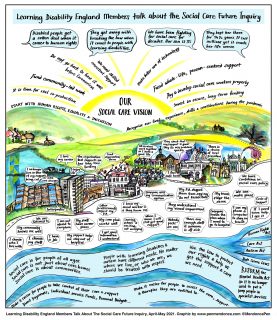
Read more about Learning Disability England’s work on the future of social care here

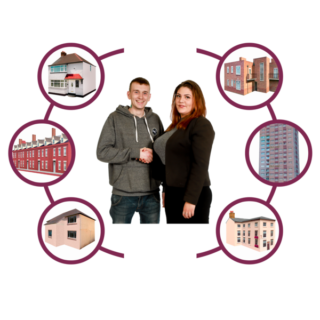
Housing Choices

Our work on housing choices includes hosting a post with JMS Trust that helps people set up their new home.

Find out more about JMS trust  here 

We are working on questions about

  • Supported Living and being safe
  • Social Housing and Supported Housing

This includes trying to understand the numbers of unexpected deaths and incidents reported to CQC by providers and shared in the BBC file on 4 programme in February 2019.

We have written a report on what we have found out so far and are doing next

You can read the July 2019 update here

There is an easy read summary at the start of the report

Learning Disability England took part in a webinar with Housing LIN in July 2021.

The session was a HAPPI Hour session about building the right homes and support.

Watch the recording and the ‘chat’ report from the session here

There is also a blog by Kevin from L’Arche on what they changed after Joe Ulleri died in hospital. You can read that here

Thank you to all the members so far who have shared information, ideas or examples from their work

If you want to share anything or tell us what you do after things go wrong in a service or what you want to see services do please get in touch

Blog by Jayne Knight, Learning Disability England member

“REACH – constantly aspire for better” Reflections on Supported Living today

Read here