
Human Rights – How can we unlock them?

Training session
10 – 11am 22nd May
(Zoom meeting)
This is being led by the British Institute of Human Rights and hosted by Learning Disability England in support of the Right 2 Home campaign
Stronger, Louder, Together!
Training session
10 – 11am 22nd May
(Zoom meeting)
This is being led by the British Institute of Human Rights and hosted by Learning Disability England in support of the Right 2 Home campaign
Here are some resources about the new guidance on wearing face coverings:
Gary Bourlet, Membership and Engagement Lead for LDE has made a video about face coverings and the new rules that come into effect on 24 July. Watch Gary’s video about face coverings here
Big Leaf Foundation have created illustrated guides on how to wear a face covering. These are available in several different languages.
Ace Anglia have recorded an video interview with a Primary Care Learning Disability Liaison Nurse. The video includes questions about wearing face coverings
It’s Sew Easy offer ten free face covering patterns to make yourself
To help us understand the rules that have changed since the beginning of July, Mencap have published easy read guides about:
The government has published guidance on the re-opening of special schools and what this will mean for children.
Inclusion North have a hub on their website with resources, including video and audio. You can also download a weekly news update.
Cornwall People First have written a useful easy read guide about the easing of the lockdown restrictions and what they mean
The Minister for Housing has written a letter setting out the measures that are in place to support social housing residents during this next phase towards reopening society.
Eddy Phillips, Carl Shaw and David Gill have forwarded us some great LGBT+ resources they have put together that might be helpful. These are:
Plain English LGBT+ Covid Guide
Easy Read Covid Guide for Trans and Non Binary People
Social Care Institute for Excellence (SCIE) have a set of guides & resources for family members, support workers, social workers & OTs on Coronavirus and how that might affect people with learning disabilities or autistic people. You can see the SCIE guides and resources here
Beacon (the advice service about NHS CHC) has increased capacity to respond to queries about NHS Continuing Health Care and has produced resources about the implications of Covid19
GPs have been given guidance by NHS England about how to support their most ‘at risk’ patients. You can read the guidance and updates for GPs here
Together Matters has put together a range of useful resources and information, including information to help family carers plan with others to get the support they need during the current crisis. You can see the Together Matters resources here
NWTDT and partners have produced a useful Grab Sheet about trauma
The British Association of Social Workers has put out guidance on safeguarding during the outbreak. you can read their guidance for safeguarding adults during Covid 19 here
Be Human has a webpage for people and families to help share useful links, practical tips and ideas, including information about what people who manage their direct payments have put in place for themselves and their PA’s. Visit the Be Human web pages here
The Challenging Behaviour Foundation have put together a range of resources and guidance specifically for families, including FAQs about the Coronavirus law and emergency powers. See the resources from the Challenging Behaviour Foundation here.
#RightfulLives have developed an online resource called My Own Front Door, particularly useful for families, which includes information and ‘livestreams’ on the Care Act Easements and Emergency Powers. You can visit the My Own Front Door resources and livestreams here
British Institute of Human Rights have a webpage with briefings on coronavirus, the law and Human Rights. You can see the BIHR coronavirus resources here
The Learning Disability Professional Senate have put together two guides, one for families and one for self advocates. You can see the LD Senate resources for people with a learning disability here and the LD Senate resources for families here
Photosymbols have developed a new website just for Coronavirus information called Keep Safe, with lots of useful easy read resources. You can see the Keep Safe web resources here
The Sensory Projects have shared resources for any families who are trying to home educate through the Coronavirus outbreak. It includes useful multi media resources for anyone about Covid 19. You can see the Sensory Projects multi media resources here
Inclusive Communication Essex (ICE) have developed a range of resources, including easy read and resources to use with children. You can access the ICE easy read web resources here
The Special Needs Jungle are sharing all the information or resources they think will help SEND families. You can access the Special Needs Jungle coronavirus SEND resources here
The National Autistic Society has information for autistic people and their families. You can see the National Autistic Society coronavirus resources here
Carers UK are sharing the up to date guidance and resources on their web site. You can find the Carers UK resources here
Citizens Advice has useful information about the extra help the government has put in place around paying bills, sick pay and benefit entitlements. You can visit the Citizens Advice coronavirus help here
Return to main Resources page here

The government has published easy read versions of their guide for people receiving direct payments and their guide to using direct payments during Coronavirus.
There is new easy read information from the government about their plan for getting back to normal after Coronavirus.
The government has also published an easy read guide about the ethical framework for adult social care. These are rules to help make sure that decisions about care and support are made fairly.
Stay Up Late Campaign have made a great news sheet which includes a cartoon story about lockdown and what we can and can’t do.
Eddy Phillips, Carl Shaw and David Gill have forwarded us some great LGBT+ resources they have put together that might be helpful. These are:
Plain English LGBT+ Covid Guide
Easy Read Covid Guide for Trans and Non Binary People
NHS England have made an easy read version of the letter GPs are sending to their ‘at risk’ patients.
You can see the NHS easy read letter for ‘at risk’ patients here
The NHS have 3 easy read posters on
If alerted you need to isolate
Getting tested if you have Corona Virus symptoms
The symptoms of Corona virus and getting tested
Inclusion North have done easy read information on the virus, including making a plan for if you need to stay at home (self isolation).
You can find Inclusion North’s easy read resources here
Achieve Together have made an easy read guide about shielding for people who have received a letter from their GP saying they are vulnerable. You can see their easy read guide about shielding here
Photosymbols have made a series of posters that explain how to stay safe, what to do if you feel unwell and what it means if you have other health conditions. You can download the Photosymbols posters here
The Downs Syndrome Association has made an easy read guide for people with Downs Syndrome that includes information on what to do if you feel ill and social distancing. You can find the Downs Syndrome Association resources here
Like shopping online? EasyRead.Info have made an easy read guide to shopping online here
Inclusion Europe are sharing information that is easy to read from different european countries. Remember the advice is from that country not the UK but it could be useful if you know people in other countries. You can find easy read information from Inclusion Europe here
Talking Mats have made easy read versions of World Health Organisation advice. You can download the Talking Mats easy read resource here
Books Beyond Words are doing a series of picture stories and illustrated guides to support people with learning disabilities and autism through the coronavirus pandemic.
Mencap have made an easy read guide to coronavirus. They have also published easy read guides about:
The Purple All Stars have made a Handwashing rap. You can watch the hand washing rap video here
Opening Doors have made an easy read guide to making your plan for staying safe and staying in. You can find the download the Opening Doors easy read guide here
Leeds Teaching Hospitals Trust have made an easy read leaflet that explains having your temperature taken. You can find their easy read guide to having your temperature taken here
Mary’s Soap Story graphic: The big messages on keeping well are about washing your hands. Mary has shared her soap story with us:

.
The World Health Organisation have made some posters about managing stress and social distancing. You can see these below:



The Department of Health have issued easy read guidance on direct payments during the pandemic here
Big Leaf Foundation have created illustrated guides on how to wear a mask. These are available in several different languages.
The government guidance for social care includes guidance on residential, supported living and home care settings. You can read the government guidance for social care here.
The government has also published an easy read guide about the ethical framework for adult social care. These are rules to help make sure that decisions about care and support are made fairly.
The Local Government Association has provided guidance to commissioners about social care provider resilience during COVID-19. This is shared guidance to local authority commissioners from the Association of Directors of Adult Social Services (ADASS), the Local Government Association (LGA) and the Care Provider Alliance (CPA). You can read the Local Government Association guidance here.
Coronavirus emergency legislation: The Coronavirus Act has emergency measures & changes to the law including the Care Act & Mental Health Act & measures to allow more staff in health & social care. You can read more about what this means for the Care Act here.
Respond has written some information to help organisations and workers think about helping people keep safe whilst at home more. You can read Respond’s information here.
Voiceability have shared their guidance in the hope it will help other advocacy organisations and those who support self-advocates. You can see Voiceability’s resources for advocacy here.
NWTDT and partners have produced a useful Grab Sheet about trauma
ACAS have put together guidance for employers and employees specific to Coronavirus. You can find ACAS resources here.
In Control and Be Human held a webinar gathering for people on direct payments, personal budgets & personal health budgets to share practical tips during COVID-19. You can access the video recording here.
NCVO have put together a range of resources that might be useful for organisational members and family members who are carers or who help manage a family member’s Personal Budget. You can see NCVO’s resources here.
The Care Workers Charity (CWC) has set up an emergency fund to help support workers, including Personal Assistants, who need to take time off work due to Covid 19. You can find out more about the CWC Emergency Fund here.
Free Training on Coronavirus: Health Education England has on line training about Coronavirus for aimed at health and social care workers. However, it is open to anyone. Read more about the free Health Education England coronavirus training here.
The Office of the Public Guardian holds a register of everyone who has a lasting or enduring power of attorney (LPA and EPA), or who has a deputy acting for them. This can be searched by social care staff to find the contact details of those involved. Read the guidance here
United Response has published Stay Inside, Be Inspired, a series of resources to help people with learning disabilities to stay active and create structure during lockdown and beyond.
We are running a webinar with Skills for Care on 21st July about good health and annual health checks. This is open to anyone with an interest in supporting people to get an annual health check but it will be especially useful to Managers in provider organisations. Find out more here or book your place.
Every Mind Matters have put together a range of accessible resources to encourage everyone to take steps to look after their mental health during this difficult time. The resources include tips and a free Mind Plan. You can see the NHS Every Mind Matters resources here.
You can download Dorset People First’s poster with some tips for good mental health here
SpeakUp’s Peaceful Minds project is a lottery funded and a co-produced project between Speakup Self Advocacy and Rotherham Advocacy Partnerships. They are working together to support people with learning disabilities and autistic people who also have mental health conditions and anxieties and have adapted the project to offer support during the coronavirus outbreak. Visit the Peaceful Minds webpage here
The Foundation for People with Learning Disabilities has put together a useful booklet called Staying happy and healthy: Things you can do to support your mental health while you have to stay at home
NHS North Cumbria have put together resources called Stop and Watch. Stop and Watch is a tool that everyone can use to help spot the warning signs that a person’s condition is deteriorating. See the Stop and Watch tools here
Simple Stuff Works have put together five videos about breathing for people with #posturalcare needs at home:
Video 1: the link between sitting and lying
Video 2: the impact of a reduced range of movement
Video 3: the impact of long term tummy lying
Video 4: what does supported lying look like
Video 5: what IS windsweeping anyway
Dorset People First have put together a workbook and also Coping Calendar in a poster format. You can download their workbook here and their Coping Calendar (via Twitter only) here
Surrey and Borders Partnership NHS Foundation Trust have made a series of videos about keeping well:
Anxiety and the body
Five things to do when feeling anxious
Five seconds breathing exercise
Balloon breathing exercise
Breathing exercise using your imagination
Explaining mindfulness and the 5 things exercise
My relaxing place exercise
The Scottish Commission for Learning Disability has a series of booklets about how to help yourself to stay fit and well during coronavirus. You can read the booklets here
An important preparation is to update your Hospital Passport. Some family members have worked with nurses and British Institute of Human Rights to make an emergency COVID-19 hospital passport that means medical professionals can get the information they need quickly. This template has now being adopted by NHSE. Here is their hospital passport / grab sheet template . You can find the guide on how to fill out the template here
The Challenging Behaviour Foundation have published a useful fact sheet about the role of learning disability nurses during the pandemic
NHS England have released a clinical guide for front line staff to support the management of patients with a learning disability, autism or both during the coronavirus pandemic. It includes information on listening to people and their families or supporters, communication and decision making. You can read the NHS England guide for front line staff here. You can read the easy read version here.
The NHS have also released a compilation of the different guidance called Supporting patients of all ages who are unwell with coronavirus (COVID-19) in mental health, learning disability, autism, dementia and specialist inpatient facilities. This has useful information about testing and going into hospital as well as information about ‘reasonable adjustments’ and protocols for transfer to an acute hospital setting where needed.
There is updated NHS guidance on hospital visiting. Most visiting is not allowed but people with learning disabilities or autistic people can have a visitor who supports them if them not being there causes more distress. The NHS visitor guidance is here.
Emergency Planning for families is very important at this time. The Dimensions family support team have created a presentation about emergency planning explaining why you might need an emergency plan and how to do it. You can also use their Dimensions templates with tips (PDF or editable Word versions).
SeeAbility is part of a group of charities who have put together some advice for care staff around supporting people with sensory loss, learning disability and autism. The guidance offers advice on how to support people and communicate effectively. View the Seeability guidance here.
Georgia Frith, a SaLT and widgit symbols have developed this easy read resource to help explain if someone has to go into hospital. You can read their easy read guide about going into hospital here
Books Beyond Words have created a short wordless story that will help people understand what to do if you have Coronavirus and how to keep yourself and those you care about safe.
They have also written a book about Going into Hospital.

Return to Information and Guidance page
This is guidance for people who think they might have the virus or have some of the symptoms. It is also for people who have been in direct contact with someone with coronavirus.
Government guidance for people who need to self isolate
Easy Read posters from Photosymbols on the latest guidance including testing and shielding.
Easy read information on face coverings made by Mencap
Social Story on why people are wearing masks
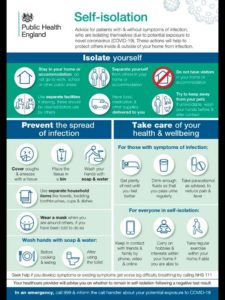
Public Health England have made a useful poster about self isolation if you think you might have the virus or have been in contact with someone else who has symptoms of coronavirus. You can see this below:
Return to Information and Guidance page
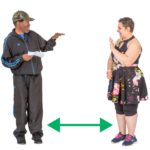
The government has asked everyone to make big changes to how we act – these are being called social distancing.
From 23 March we were told to stay at home apart from for essential shopping and medical care or if you do an essential job.
From the beginning of July some things are starting to go back to normal, but we are still being asked to do social distancing. Mencap have made an easy read guide about the new rules.
Social distancing is to try and stop the virus spreading to other people especially people who are more vulnerable. This includes people who are older. This includes people who have got long term health conditions.
And this includes people with a learning disability even if they don’t have other health conditions, because they are more likely to need support in their lives or they are more likely to find it harder to access health and advice services.
We think it is important that everyone looks at the social distancing guidance and talks about it.
The guidance is now a requirement and not just advice. So we think it is important people think about what it means to them and those around them and come up with a plan.
The latest government guidance about staying at home can be seen via these links:
Latest government guidance about staying home
Easy read summary about staying at home
PhotoSymbols have made a poster about staying home here
Guidance on staying alert and social distancing – not easy read yet
NHS Health at Home
To maintain social distancing, people are advised to stay at home as much as possible. Also some where people will need to shield or self-isolate, for example if they are extremely clinically vulnerable or have symptoms of coronavirus.
The Health at Home campaign gives people the information they need to contact their GP, order repeat prescriptions, manage their wellbeing and existing conditions – without having to leave home.

Return to Information and Guidance page
As we move into recovery stage, NHS England has published guidance about accessing NHS services when you need them. This includes going to A&E, hospital appointments , GP services, getting medication and dentists. You can read the full guidance here. You can read the easy read guidance here
The Office for National Statistics has now published Coronavirus (COVID-19) related mortality by religion, ethnicity and disability: England and Wales, 2 March 2020 to 15 May
The government has published advice for people who buy care and support through a direct payment, as well as local authorities, clinical commissioning groups and those who provide care and support. This includes easy read versions.
The new government guidance for wearing face coverings is here
The government has published an update on policies for visiting arrangements in care homes.
The government has published an easy read version of their plan to rebuild and get back to normal after Coronavirus.
On behalf of the Department of Health and Social Care, SCIE has published guidance to delivering safe, face-to-face adult day care.
A joint letter from Children and young People and Care Ministers to children and young people with SEND regarding the full return to educational settings in September 2020.
The NHS has updated their legal guidance for mental health, learning disability and autism, and specialised commissioning services supporting people of all ages during the coronavirus pandemic.
There is important new guidance for people who are Extremely Vulnerable to the virus because of other health conditions they have.
You should always to follow the advice from the NHS and Public Health England. You can read NHS and Public Health England general guidance here
You can read NHS general FAQs about what you can and can’t do here
Health Education England have published guidance in a range of accessible formats, including formats suitable for children and for older people. Access the NHS / HEE library here
You can see the easy read guidance from Public Health England here
NHS England have produced updated guidance for care staff supporting adults with learning disabilities and autistic adults on 24 April. You can read the guidance for care (support) staff here
The NHS have issued guidance about discharge from hospital during Covid 19. You can see the NHS slides from their webinar on hospital discharge here
You can see the NHS easy read clinical guidance for support staff here
Public Health England have published guidance about funerals during coronavirus here
The Department for Health and Social Care have put together replies to Frequently Asked Questions along with a sign up to receive weekly bulletins: 30th June 2020

The British Medical Association (BMA) is the national organisation that represents doctors.
They have written a paper about what doctors should do if there are more people with Covid-19 than they can treat.
Read more “BMA Ethics guide and disabled people”